

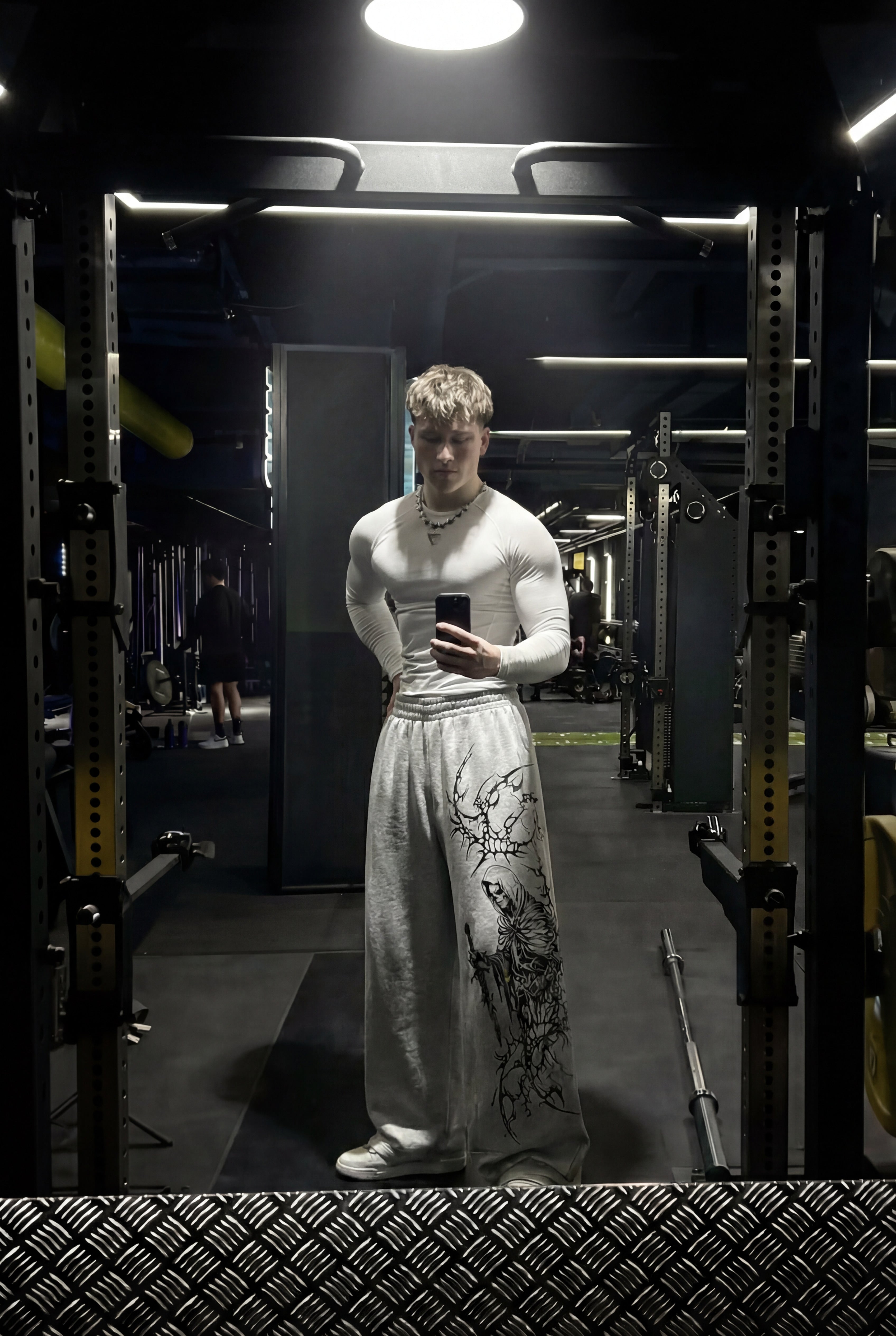
Best Baggy Gym Pants for Men: Comfort, Mobility & Style
Baggy pants work brilliantly for gym training when chosen correctly, they accommodate squat depth, deadlift mobility, and thigh-developed athletic builds in ways slim joggers cannot. The best gym baggy pants use stretch cotton or cotton-blend fabric, drawstring or elastic waist, tapered or open ankle (avoid wide-leg for gym), and dark colours that hide sweat marks. Cotton 300-320 GSM works well; lighter fabrics tear at high-stress points.
The gym pants conversation has shifted dramatically since 2023. For two decades, slim joggers and compression pants dominated gym aesthetics- Nike Tech Fleece, Adidas tapered joggers, Under Armour compression. Then bodybuilders started wearing baggy pants, the 'pump cover' aesthetic took over Instagram, and Gymshark released their entire baggy sweatpants line. Baggy at the gym went from cringe to default in 24 months.
Indian gym buyers have caught up fast. But most are choosing the wrong baggy pants, slim-fit chinos labelled 'relaxed,' polyester joggers with too much stretch, or cheap cotton sweatpants that fail at the thigh seams within months. This guide breaks down what actually works for Indian gym conditions, and how to choose baggy pants that perform as workout wear and street wardrobe simultaneously.
Why Baggy Pants Beat Slim Joggers for Gym
1. Squat Depth and Knee Mobility
Slim joggers restrict the deep squat depth that proper compound lifting requires. The fabric pulls at the knee when you reach parallel or below. Baggy pants give the leg room to move through full range of motion without fabric resistance. For squats, deadlifts, lunges, and any compound lift involving knee flexion, baggy pants outperform slim joggers significantly.
2. Thigh Accommodation for Athletic Builds
Indian men who train regularly develop noticeable thigh and glute mass within 12-18 months. Slim joggers either don't fit at the thigh (creating uncomfortable pulling) or fit at the thigh but become baggy elsewhere (looking shapeless). Baggy pants accommodate developed leg muscle naturally, the cut is built for the proportions that serious training creates.
3. Pump Cover Aesthetic
Bodybuilding culture has formalised the 'pump cover' look, oversized pieces that hint at the muscle underneath without fully revealing it. Baggy pants are the lower-body equivalent. The contrast between fitted top (showing the pump) and baggy bottom (suggesting the development) creates the V-taper aesthetic that gym photography rewards.
4. Heat and Airflow
Indian gyms range from poorly-ventilated to functionally outdoor (rooftop facilities). Baggy pants allow significantly more airflow than slim joggers, particularly important during 30°C+ summer training sessions. The looser fabric also wicks away sweat better than compression fabrics that trap moisture against the skin.
5. Gym-to-Street Versatility
Modern Indian gym buyers don't want pants that only work at the gym. Baggy pants in cotton or cotton-blend deliver gym performance and street-wearable silhouette simultaneously. The same pant works for morning training, post-workout meal, and evening casual wear, eliminating the need for a separate 'gym wardrobe' and 'street wardrobe.'
The 6 Specs for Gym-Ready Baggy Pants
1. Stretch Cotton or Cotton-Blend
Pure cotton baggy pants can restrict the most demanding movements (deep squats, plyometric work). Cotton-blend with 3-7% elastane or spandex maintains the cotton hand-feel while adding the stretch that high-mobility training requires. Pure cotton works for most gym work but cotton-blend handles every variation.
2. Drawstring or Elastic Waist
Hard waistbands cut into the abdomen during squats, deadlifts, and any movement requiring hip flexion. Drawstring or elastic waists move with the body. Drawstring offers better adjustment for buyers experiencing significant body composition change during training cycles.
3. Mid-Weight Fabric (300 GSM Cotton Equivalent)
Too light (under 200 GSM): fabric becomes transparent when soaked through with sweat. Too heavy (over 350 GSM): traps body heat, becomes uncomfortably warm during cardio. The 300-320 GSM cotton sweet spot delivers structure for the silhouette, breathability for Indian gyms, and durability for repeated washing.
4. Reinforced Stitching at Stress Points
Gym wear faces higher stress than street wear. Squats and lunges stress the inseam, deadlifts stress the waistband, and hip mobility stresses the gusset. Look for reinforced double-needle stitching at all these points. Cheap baggy pants fail at the inseam within 2-3 months of regular gym use.
5. Dark Colours That Hide Sweat
Sweat marks show dramatically on cream, beige, and light-coloured pants. Black, charcoal, deep olive, and navy all hide sweat well during and after workouts. Dark colours also hide mid-workout food stains (post-workout meal eaten in same pants), chalk marks, and gym floor dust.
The Best Gym Baggy Pants for Different Training Styles
For Powerlifting and Heavy Compound Lifts
Cotton-blend baggy pants in mid-weight 300 GSM with drawstring waist and reinforced inseam. Pure cotton works but stretch-cotton blend handles the highest demand movements better. Squats, deadlifts, and barbell rows all require maximum hip and knee mobility, the fabric must move with the body.
For Bodybuilding / Hypertrophy Training
Mid-weight cotton baggy pants in true streetwear silhouette. Drop-shoulder construction on the matching tee. Black or charcoal colour palette. The pump-cover aesthetic is the primary visual goal, the pants are part of the bodybuilding presentation as much as part of the workout.
For CrossFit and Functional Training
Stretch cotton-blend or technical fabric baggy pants with drawstring waist and tapered ankles. CrossFit involves rope climbs, box jumps, and high-impact movements where wide-leg fits become dangerous. The pant must handle full range of motion without catching on equipment.
For Cardio-Heavy Training (Spin, HIIT, Boxing)
Lighter-weight cotton-blend baggy pants closer to 240 GSM than 300 GSM. The looser fit accommodates heat dissipation during sustained cardio. Drawstring waist prevents shifting during high-movement work. Tapered ankle keeps the hem clear of equipment.
For Recreational Gym (3-4 Days a Week, Mixed Training)
Standard 300-320 GSM cotton baggy pants, the most versatile option. GENRAGE baggy pants in cotton twill cover this use case well, working for compound lifts, accessory work, light cardio, and post-workout casual wear without compromise.
Gym-to-Street Outfit Formulas with Baggy Pants
The Pump Cover Default
Black baggy pants + fitted sleeveless tee (showing the pump) + chunky sneakers + cap. The most photographed Indian gym aesthetic in 2026. Works for both gym session and post-workout meal.
The Layered Gym Look
Charcoal baggy pants + black sleeveless tee + open zip hoodie (worn until pump time) + chunky sneakers. Hoodie comes off mid-warmup, vest stays. Layered look that works through Indian winter gyms.
The Gym to Office Transition
Black baggy pants + black t-shirt + clean white sneakers + structured overshirt or zip-up hoodie. Acceptable in creative offices and most modern Indian startups. Caveat: works only in workplaces where streetwear is part of the dress code culture.
The Outdoor Training Look
Olive cargo baggy pants + black sleeveless tee + canvas shoes + cap. Suited for rooftop gyms, outdoor calisthenics parks, beach runs in Goa or Pondicherry.
What to Avoid for Gym Baggy Pants
• Wide-leg baggy pants (30cm+ hem)- unsafe with barbells and plyometric work
• Pure polyester athletic pants labelled 'baggy'- uncomfortable in Indian heat, develop smell fast
• Light-coloured baggy pants- sweat marks visible within first set
• Raw denim baggy pants- restrict mobility, hold sweat badly, take days to dry
• Cheap cotton baggy pants without reinforced stitching- fail at the inseam within 60-90 days
• Cargo baggy pants with bulky thigh pockets- pockets catch on machine cables and barbell setups
Care for Gym Baggy Pants
• Wash after every 2-3 gym sessions max- cotton absorbs sweat heavily and develops bacteria fast
• Use slightly warmer water than usual (30-35°C)- kills bacteria more effectively than cold-water-only washing
• Add white vinegar (½ cup) to rinse cycle to neutralize smell- particularly important during summer months
• Air-dry indoors with fan- direct sunlight fades fabric, dryers shrink the fit
• Rotate 3-4 pairs in regular rotation- prevents over-wear on individual pieces and extends total lifespan
Why GENRAGE Baggy Pants Work for Gym
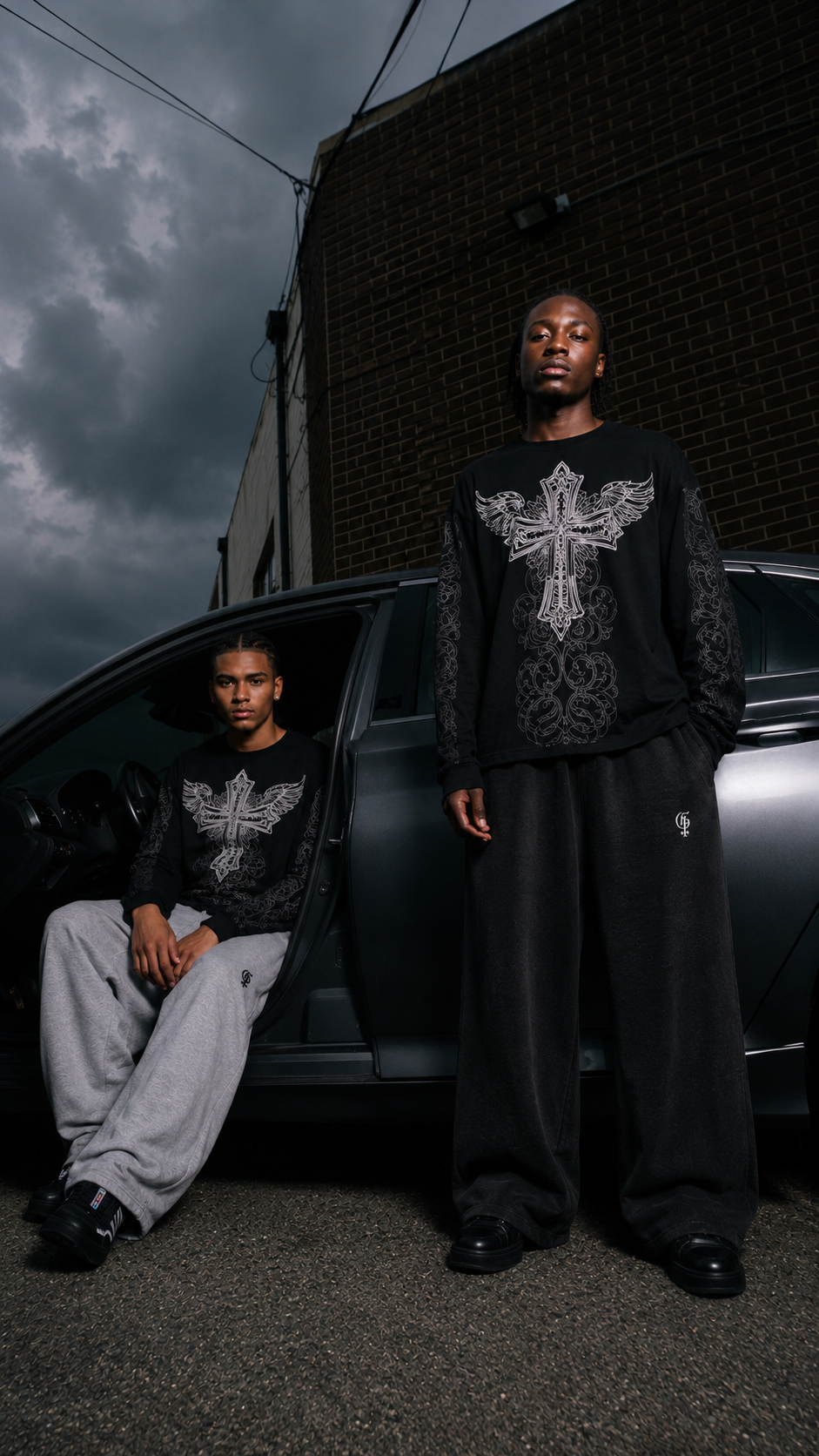
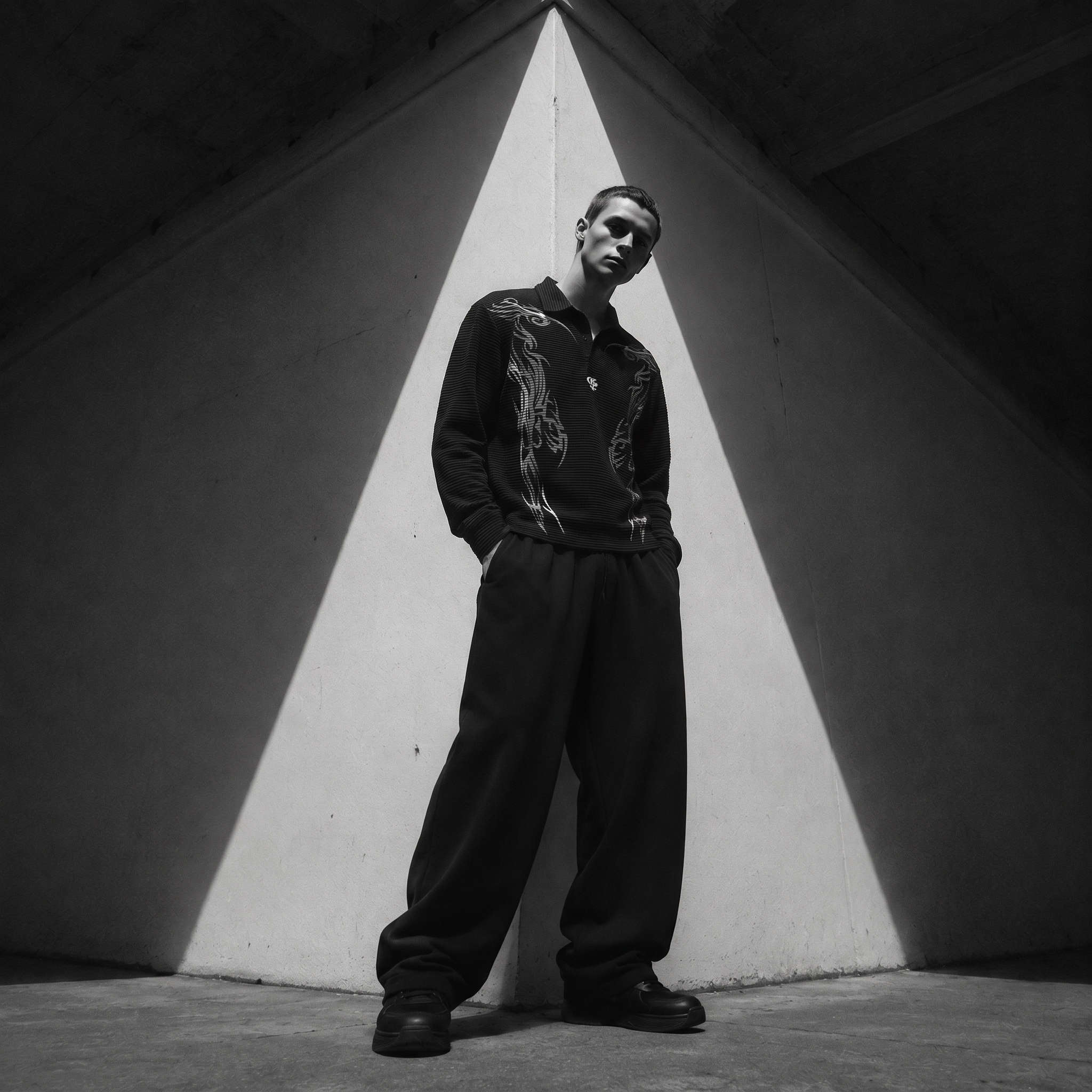
GENRAGE baggy pants are manufactured at 240 GSM cotton twill with bio-washed finishing, elastic waists with adjustable drawstrings, and reinforced stitching at high-stress points, the exact specifications that handle gym demands. The straight-leg cut (rather than wide-leg) keeps the silhouette safe around equipment. Dark colour palette (black, charcoal, deep olive) hides sweat marks during and after sessions. The same pant transitions from gym session to street wear without needing change of clothes.
Frequently Asked Questions
Are baggy pants good for the gym?
Yes, they're particularly good for compound lifts (squats, deadlifts), bodybuilding aesthetics (pump cover look), and developing athletic builds that don't fit well in slim joggers. The right baggy pants give the leg room compound movements require while accommodating developed thigh and glute musculature. Choose stretch cotton or cotton-blend, dark colours, tapered or open-straight ankles.
Can I wear baggy pants for squats and deadlifts?
Yes and they work better than slim joggers for both. The looser fit gives knees room to flex through full squat depth without fabric resistance, and accommodates hip mobility during deadlift setup and execution. Choose stretch cotton-blend with reinforced inseam stitching for the most demanding lifting work.
What's the difference between baggy gym pants and baggy sweatpants?
Functionally similar, branded differently. 'Baggy sweatpants' typically uses heavier fleece or French terry fabric (300+ GSM), better for cool-weather training and post-workout warmth. 'Baggy gym pants' usually refers to lighter mid-weight cotton or technical fabric (200-240 GSM), better for warm Indian conditions and active training. Choose based on your gym temperature and training intensity.
Will baggy pants make me look skinnier or bigger at the gym?
Bigger. The baggy lower body combined with fitted upper body (oversized tee, sleeveless vest, or compression top) creates the V-taper silhouette that bodybuilding aesthetics reward. The contrast between fitted top and loose bottom amplifies upper body size visually. This is the entire principle behind the 'pump cover' aesthetic dominating Indian gym Instagram in 2026.
Are baggy pants safe to wear at the gym with barbells?
Yes, with one caveat, avoid wide-leg baggy fits (30cm+ hem). Standard baggy pants with tapered or open-straight hems (22-28cm) are safe around barbells, deadlift platforms, and squat racks. Wide-leg fits can catch during heavy compound work. Choose tapered or drawstring ankle baggy pants for any gym work involving plates or barbells.
Can I wear the same baggy pants for gym and going out?
Yes and this is a major advantage of choosing premium streetwear baggy pants over gym-specific athletic gear. A 300-320 GSM cotton baggy pant works for gym training in the morning, casual wear during the day, and going-out outfit in the evening with appropriate top changes. The cost-per-wear is dramatically lower than maintaining separate gym and street wardrobes.
Squat depth. Pump cover. Street wearable. Three jobs. One pant.

Leave a comment
This site is protected by hCaptcha and the hCaptcha Privacy Policy and Terms of Service apply.